
Fire, Form & Discipline: A Lunar New Year Masterclass at Tao-Fu

Cultural Significance & Theatrical Prelude
Chinese New Year remains one of the most symbolically codified festivals in the world. Reunion, prosperity, longevity and collective harmony form its philosophical spine. Every gesture — from performance to plating — carries meaning. It is a celebration where food becomes narrative and ritual becomes articulation.
The reunion table signifies unity. Prosperity dishes invoke abundance. Longevity noodles express endurance and well-being. Red envelopes circulate blessings and fortune. Tradition here is declarative, not decorative.
Within this framework, ritual performance becomes invocation rather than entertainment. For the Year of the Fire Horse, symbolism shifts toward vitality, momentum and disciplined force. The Horse in Chinese cosmology represents courage, intelligence and unrestrained energy — qualities amplified under the elemental force of fire.
Fire Horse Celebrations at Tao-Fu, JW Marriott Pune

Against this cultural backdrop, the Year of the Fire Horse was ushered in with ceremonial conviction at Tao-Fu, the speciality Chinese restaurant at JW Marriott Pune. The celebration was curated with cultural literacy and gastronomic seriousness rather than ornamental theatrics.
Imperial red and burnished gold defined the visual grammar of the evening — colours symbolising prosperity, renewal and ambition. The Fire Horse, known for vitality and forward propulsion, found expression not merely in décor but in the structural rhythm of the entire experience.

The visiting dance troupe from Kolkata delivered a performance that was both kinetic and dignified. Live drumming anchored the atmosphere with commanding percussion, while the choreography carried an almost hypnotic fluidity. Movements were controlled, expansive and intentional — evoking strength without excess, celebration without spectacle.
The interplay between drum resonance and disciplined motion created an immersive overture. It did not feel staged for effect; it felt ceremonially grounded. The performance honoured the spirit of the Fire Horse — dynamic, confident and forward-moving.
From this ritual prelude to the seated culinary progression, the evening unfolded with measured cadence. Nothing appeared incidental. The atmosphere communicated confidence through restraint — a quality far more powerful than exaggeration.
Culinary Direction – The Authority of Head Chef Fu Lie

At the helm, Head Chef Fu Lie demonstrated mastery anchored in classical Chinese technique and refined interpretation. His culinary grammar emphasised balance — calibrated seasoning, structured umami layering, disciplined wok hei and architectural precision in dumpling craft.
Authentic Chinese gastronomy demands rigour: exact knife work, controlled heat management, clarified broths of depth and pleating executed with finesse. Chef Fu Lie’s direction reflected uncompromising clarity. Sweetness was measured, heat purposeful and salt impeccably restrained. There was authority in restraint — a hallmark of true craftsmanship.
This philosophy was evident in the flavour architecture across the curated menu. Umami was layered rather than imposed. Spice was controlled rather than aggressive. Acid lifted rather than startled. Texture was engineered — crisp against tender, silk against crunch — reinforcing structural balance at every stage.

Associate Chef Anuj Rana functioned as an intelligent extension of this vision. His execution reflected compositional discipline and unwavering consistency.
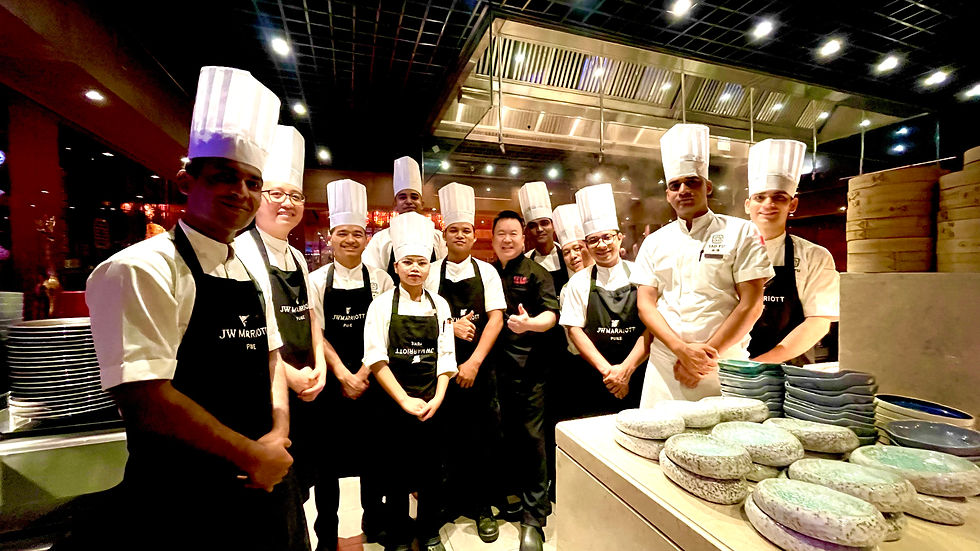
Supporting them was an exceptional brigade whose cohesion was unmistakable:
Chef Sudhir, Mohamad, Rohit, Biswajit and Tenzin.
Their collective precision ensured temperature integrity, uniform plating and seamless sequencing. Excellence at this level is engineered through relentless repetition, training and pride. The kitchen operated not as hierarchy, but as synchronised intent. Their creativity was thoughtful, their discipline unwavering, and their commitment visibly embedded in every plate.
Flavour Architecture – A Retrospective Tasting
I began, course by course, allowing the menu to unfold in its intended sequence. What revealed itself was disciplined flavour construction and technical clarity. Each dish demonstrated calibrated balance rather than ornamental complexity. There was structure in every bite — intention rather than improvisation.
SALAD

Baby Spinach, Gem Lettuce, Sesame Soy Lemon
I opened with the greens. The baby spinach and gem lettuce offered gentle chlorophyll sweetness, faint bitterness and tender texture. The sesame soy dressing introduced nutty umami depth, while lemon sharpened the architecture with clean, precise acidity.
It refreshed without startling. Soft leaves contrasted with intermittent crunch, and the seasoning remained composed. It functioned exactly as an opening course should — awaken the palate, never overwhelming it.
Chicken Blue Pea, Egg Edamame, Crispy Chili Sesame
Next, I moved to the layered protein composition. The chicken provided structural neutrality; the egg added quiet richness. Edamame contributed vegetal sweetness and firmness, anchoring the dish texturally.
The crispy chilli sesame delivered controlled heat and toasted aroma — assertive yet disciplined. I noted the interplay of softness, creaminess and crunch. The heat never dominated; it elevated. The balance between protein depth and spice lift felt deliberate and assured.
Wok Tossed Five Spiced Prawns, Mint Leaf, Salt & Pepper
The prawns marked a shift toward aromatic complexity. The five-spice blend introduced warmth — star anise, clove and pepper resonating gently rather than aggressively. The prawns themselves remained sweet and succulent, cooked with precision.
Mint cut through the spice architecture with volatile freshness, preventing heaviness. The restrained salt-and-pepper finish enhanced umami without obscuring the shellfish’s natural delicacy. It was a confident expression of contrast — warmth countered by lift.
DIM SUM

Poached Fresh Mushroom, Glass Noodles, Garlic Chives
I approached the mushroom dim sum with attention to texture. The mushrooms delivered deep glutamate richness; the glass noodles absorbed flavour while offering gentle elasticity. Garlic chives punctuated the composition with green sharpness.
The effect was delicate yet deeply savoury. Softness prevailed, structured by umami clarity rather than density. It reflected restraint — a quiet confidence in ingredient integrity.
Steamed Tofu, Fennel Leaf, Yachai Chestnut, Bird Chili, Scallions
The tofu variation demonstrated layering with precision. The tofu acted as a neutral canvas, absorbing flavour without resistance. Fennel leaf introduced subtle anise freshness, while yachai provided fermented salinity.
Chestnut offered measured sweetness and bite; bird chilli introduced exact, calibrated heat. I observed how sweet, salty, herbal and spicy notes coexisted without collision. The contrast between soft tofu and crisp inclusions felt architecturally intentional.
Crispy Fried Lamb, Sweet Pepper, Cream Cheese
This was the most assertive of the dim sum offerings. The lamb delivered gamy depth and richness. Sweet pepper contributed vegetal brightness, while cream cheese added fat structure and gentle tang.
The crisp exterior yielded to an indulgent interior. It was bold yet not excessive — richness tempered by sweetness and structural balance.

Chicken Wrap, Seaweed, Asparagus, Chili Oil
The chicken wrap returned to compositional restraint. Seaweed introduced iodine salinity and oceanic umami. Asparagus provided clean vegetal snap. Chili oil offered aromatic warmth rather than sharp aggression.
The dish felt controlled and balanced. Heat remained restrained, allowing vegetal clarity and protein integrity to lead.
CHEF FU LEI’S SIGNATURE DISHES
Pan Seared Radish Cake, Fragrant Chili Sauce
The radish cake revealed mild sweetness and interior density. The pan sear achieved a Maillard crust — crisp, golden and texturally satisfying.
The fragrant chilli sauce layered heat without overwhelming the radish’s natural character. I appreciated the interplay between crisp exterior and tender centre. It demonstrated technical control and flavour restraint.
Tofu Morel Mushroom, Ginger Scallions Sauce
This composition embodied quiet elegance. The morels delivered deep, forested umami. The tofu provided structural neutrality, absorbing the aromatic ginger and scallion sauce.
Ginger introduced warmth; scallions added clean lift. The umami remained central, supported by aromatic punctuation. It was restrained, confident and intellectually composed.

CHEF FU LEI’S SIGNATURE WOK
Steamed Bok Choy, Carrot, Radish, Bamboo Shoot, Shiitake Sichuan Sauce
The vegetables retained natural sweetness and integrity. Bamboo shoot offered decisive crunch; shiitake contributed savoury depth. The Sichuan sauce introduced subtle numbing spice — present yet controlled.
Tenderness and crispness coexisted harmoniously. The spice never overshadowed the vegetal clarity.
Stir Fry Snow Peas, Water Chestnut, Asparagus, Garlic Shaoxing Wine
This dish celebrated texture. Snow peas and asparagus delivered vibrant green freshness. Water chestnut provided pronounced crunch. Garlic deepened aroma, while Shaoxing wine introduced mild fermented sweetness.
It felt bright, lively and structurally precise — an articulation of high-heat wok discipline.
Traditional Sichuan Style Poached Fish, Bean Sprout Chili
The fish remained delicate and moist, treated with respect. Chili oil and Sichuan pepper layered heat gradually, building ma la complexity without abrupt aggression.
Bean sprouts contributed freshness and crunch, anchoring the spice architecture. The dish was bold yet controlled — intensity governed by discipline.
“Mom’s Made” Steamed Pork, Yachai, Soy Hoisin Sauce

The pork retained succulence and depth. Yachai delivered fermented salinity; soy and hoisin introduced rounded sweetness and umami glaze.
It felt comforting yet structurally refined. Savoury dominance prevailed, supported by measured sweetness — a composed conclusion within the savoury progression.
Across the tasting, I observed consistency in balance, texture and aromatic layering. Sweetness was never indulgent. Heat was never aggressive. Umami was layered, not imposed.
This was a menu shaped by discipline — and tasted as such.
Chef’s Signature Dessert Platter

The dessert course arrived not as an afterthought, but as a structured epilogue — a carefully orchestrated quartet presented under the philosophy of Togetherness and Completeness. Each component held its individual voice, yet the plate read as a unified composition.
The finale concluded with restraint and architectural harmony. Sweetness was meticulously calibrated rather than indulgent, allowing secondary notes — toasted nuttiness, gentle floral and restrained fruit acidity — to articulate themselves with clarity. There was no saccharine excess, no decorative distraction. The emphasis remained on balance and flavour integrity.
Among the four elements, the undisputed showstopper was the coconut ice cream crafted without milk — a dairy-free expression that retained luxurious mouthfeel without heaviness. It delivered pure coconut clarity: naturally sweet, subtly nutty and clean on the finish. The absence of dairy allowed the ingredient’s inherent oils to shine with remarkable transparency. Its texture was satin-smooth, its melt controlled, and its aftertaste refreshingly linear.
It was not merely technically impressive; it was philosophically aligned with the evening — disciplined, thoughtful and complete.
As a closing gesture, the platter did not overwhelm. It resolved. It concluded the narrative with composure, leaving the palate satisfied yet unburdened — a refined and intelligent culmination of a meticulously structured culinary journey.
Beverage Programme

The beverage narrative was anchored by the outlet’s senior-most mixologist, Abraham, whose philosophy and structural discipline continue to define the bar’s identity. Although the evening unfolded in his absence, his framework of balance, restraint and compositional clarity was unmistakably present.
On the floor, Tarun Pillai and Amit Singh executed the programme with confidence and technical assurance, presenting two thoughtfully constructed cocktails that aligned cohesively with the Fire Horse celebration.

Chariot, especially created for the event, was structured around vodka, elevated by apple and clove syrup that delivered gentle orchard sweetness layered with warm spice undertones. Sparkling wine introduced effervescence and vertical lift, ensuring brightness and celebratory finesse. The cocktail felt festive yet composed — aromatic without heaviness, sweet yet disciplined.
Silk Road, a creation by Tarun Pillai, showcased botanical gin supported by pineapple sacrum, which contributed rounded tropical sweetness and subtle acidity. Tonic water sharpened the structure with crisp bitterness and effervescence, extending the finish elegantly. The result was vibrant, refreshing and technically assured — fruit-forward without sacrificing spirit integrity.
Across both compositions, dilution was controlled, temperature calibrated and garnishes purposeful rather than ornamental. Base spirits retained clarity; secondary notes were layered with intent. Even in Abraham’s absence, the bar operated within the architectural discipline he has evidently institutionalised.
The beverages complemented the cuisine rather than competing with it, reinforcing a refined dialogue between bar and kitchen. Creativity was visible; discipline remained foundational.
Service Excellence

Service was orchestrated with polished authority by Lakshmikant Pathak (Restaurant Manager), whose leadership reflected quiet confidence and operational mastery.
Supporting him was an impressively synchronised team:
Jeneth, Upashna, Zeli, Sabina, Sriya, Ruata, Sandip, Ruship, Azim, Mamta, Chiu, Mathiu and Yojena.
The floor operated with cultivated hospitality — intuitive pacing, articulate product knowledge and discreet attentiveness. Transitions were seamless. Course explanations were informed yet succinct. Temperature integrity from kitchen to table remained intact.
This was not per formative service; it was refined professionalism shaped by discipline and pride. Their dedication elevated the evening beyond dining into experience.
Leadership & Vision

Such seamless cohesion speaks to thoughtful and inspired stewardship.
Sincere appreciation is extended to:
Mr. Amit Kumar - General Manager
Mr. Rahul Gautam – Operations Manager
Executive Sous Chef - Pradeep Singh
Mr. Asim Patial – Associate Director F&B
Mr. Amit Negi – Director – Restaurants
Their collective alignment was evident in every dimension of the evening’s design. Cultural nuance, culinary mastery, and service choreography unfolded as one integrated narrative. The leadership did not seek prominence; it created the conditions for excellence to emerge naturally and gracefully.
Conclusion

The Chinese New Year celebration at Tao-Fu (17th to 21st February, 6:30 pm onward) positioned itself as far more than a themed dinner. It unfolded as an orchestrated sensory narrative — dragon rhythms resonating through the lobby, structured umami articulated across courses, refined cocktails composed with precision and service calibrated to luxury standards.
Authenticity was interpreted through contemporary finesse. Tradition was neither diluted nor exaggerated; it was elevated.

The experience felt renewed — culturally immersive, culinarily articulate and operationally seamless. It reaffirmed Tao-Fu at JW Marriott Pune as a destination where festive celebration converges with disciplined gastronomy.
Do visit Tao-Fu during the festive window to experience this curated celebration firsthand. Expect authenticity. Expect precision. Expect excellence.
— Manav Kaushik
DWF (Don’t Waste Food)



Comments